
Union County Booking Releases
Union County booking releases give the public access to arrest and detention records from the county jail in Monroe, North Carolina. The Union County Sheriff's Office manages all bookings and releases. This fast-growing county near Charlotte processes a large number of arrests each year. Anyone can search Union County booking releases to find arrest details, view inmate data, or check release information. These records are public under North Carolina law.
How Union County Booking Records Work
Every arrest in Union County creates a booking record. The jail logs the person's name, charges, and bond amount. Photos and fingerprints are collected at intake. A magistrate reviews the charges and sets bond. All of this data enters the Union County booking releases system.
When someone leaves custody, a release record is created. It shows the date and reason for release. Bond postings, court orders, and sentence completions are common types.
The Union County Sheriff's Office website shown above is a starting point for finding booking releases and detention information.
Searching Union County Booking Releases
The Union County Sheriff's Office provides tools for searching booking releases. Contact the office in Monroe for current inmate information.
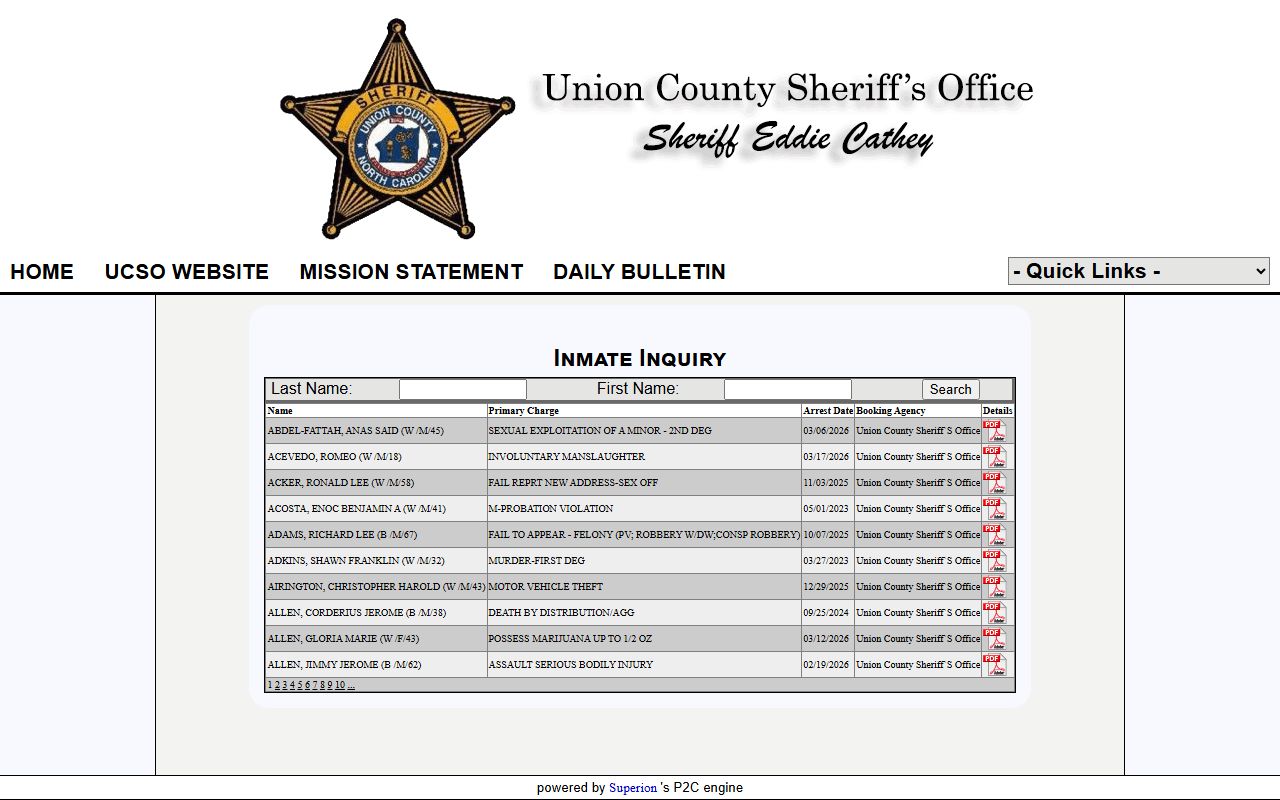
The inmate search tool shown above helps locate people held in the Union County jail. Search by name for best results. Released inmates will not appear in the active list. For older records, contact the sheriff's office directly.
Note: Union County inmate search data updates as bookings and releases are processed throughout the day.
Union County Arrest Records Access
Arrest records in Union County are public under North Carolina law. N.C.G.S. § 132-1 gives citizens the right to inspect government records, including booking releases and jail logs. N.C.G.S. § 132-1.4 sets specific rules for law enforcement records. Most booking data from the Union County Sheriff's Office is open to the public.
The Union County Clerk of Superior Court holds court records tied to arrests. Court files include case outcomes, plea records, and sentencing details. Visit the clerk's office in Monroe to review records. Certified copies cost $25 per document.
Booking Releases Data in Union County
Each Union County booking release contains standard information. The record shows the full legal name and date of birth. It lists all charges and the bond amount. The arresting officer and agency are noted. The booking date is included.
Release records add the release date and type. Common types include:
- Secured bond through a bondsman
- Unsecured bond set by a judge
- Written promise to appear
- Time served on the sentence
- Transfer to another facility
N.C.G.S. § 153A-220 gives counties like Union the authority to maintain these records and share them with the public upon request.
Union County Court Records
Court records connect to Union County booking releases through the criminal case process. After an arrest, the case goes to court in Monroe. The clerk of court keeps all files. Under N.C.G.S. § 7A-109, these records are open for public inspection.
Court records have more detail than booking releases. They include plea agreements, trial outcomes, and sentencing orders from Union County courts.
Note: Charges in court records may differ from the original Union County booking release if amended during proceedings.
State Resources for Union County
State-level tools supplement Union County booking releases. The NC Department of Adult Correction runs an offender search for state prisons. The NC State Bureau of Investigation handles statewide criminal history checks. The NC Courts system provides online case lookups.
These tools give a broader picture than Union County booking releases alone. They are useful for finding records of people who were booked locally but later transferred to state custody.
Requesting Union County Booking Releases
You can request booking releases from Union County by visiting the sheriff's office in Monroe. Bring a photo ID and the full name of the person you want to look up. Walk-in requests are handled during business hours. Written requests are also accepted.
Response times depend on the request scope. Current inmate checks may be done quickly. Historical Union County booking releases may take several business days to retrieve.
Understanding Union County Booking Releases
Booking releases in Union County serve as an important public record. They document every arrest and release that happens through the county jail system. Each record is created at the time of booking and updated when the person leaves custody. The data is stored by the Union County Sheriff's Office and kept as a permanent record.
North Carolina law treats booking releases as public records. Under N.C.G.S. § 132-1, any person can ask to see these records. The law does not require you to give a reason for your request. You simply need to identify the records you want to see. The sheriff's office must then make them available within a reasonable time.
Union County is one of the fastest-growing counties in North Carolina. Located just south of Charlotte, the county seat of Monroe is where all criminal justice operations are centered. The growing population has led to increased arrest activity and a larger volume of booking releases each year. The sheriff's office manages this data and makes it available to the public under state law.
Union County Booking Releases and Legal Rights
Access to booking releases in Union County is protected by North Carolina law. N.C.G.S. § 132-6 allows any person to request copies of public records. The sheriff's office must respond within a reasonable time. In-person inspection is free. Fees apply only for copies.
If a request is denied, N.C.G.S. § 132-9 provides a way to appeal. This applies to Union County booking releases and all other public records. The law favors openness and gives citizens strong protection when seeking arrest and booking data.